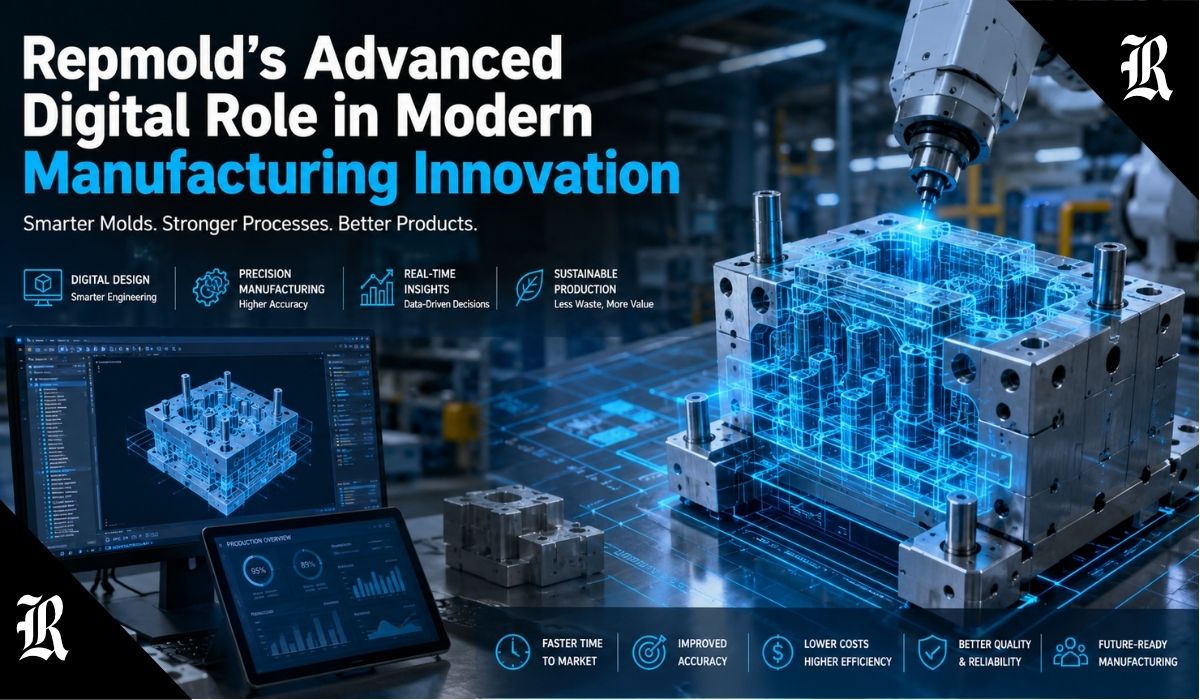
Repmold is becoming an interesting keyword in modern manufacturing because it connects two powerful ideas: repeatable molding and digital production. In simple terms, Repmold can be understood as a digitally supported mold replication workflow that helps manufacturers design, test, adjust, and produce parts with better speed and accuracy. For U.S. manufacturers facing rising labor costs, supply chain pressure, and demand for faster product development, this kind of digital molding approach feels especially important. It reflects how factories are moving away from slow, manual trial-and-error methods and toward smarter systems powered by CAD design, 3D modeling, automation, data tracking, and rapid prototyping.
What Is Repmold in Modern Manufacturing?
Repmold refers to the idea of using digital tools to improve mold creation, mold replication, and part production. Traditional mold-making often requires long lead times, expensive tooling, and multiple physical revisions before a final part is ready. Repmold changes that process by introducing digital planning at the earliest stage. Engineers can create a virtual model, test measurements, simulate production issues, and refine the mold before major money is spent on physical tooling. This helps companies reduce waste, improve part consistency, and move from concept to production more efficiently.
Why Repmold Matters for U.S. Manufacturers
In the United States, manufacturers are under pressure to deliver better products faster while keeping costs under control. Repmold supports that goal by making production more flexible. Instead of waiting weeks for mold changes, companies can use digital design files, prototype tooling, and automated quality checks to speed up decision-making. This is useful for automotive suppliers, medical device companies, consumer product brands, aerospace contractors, electronics firms, and packaging manufacturers. When speed and precision matter, a Repmold-style process can help teams avoid delays and respond quickly to customer needs.
The Digital Foundation Behind Repmold
The strength of Repmold comes from its digital foundation. Computer-aided design, digital twins, 3D scanning, CNC machining, additive manufacturing, and production analytics all play a role in making mold development more accurate. A design team can scan an existing part, build a digital model, analyze weak points, and create a refined mold plan. This makes the process more controlled and transparent. Instead of relying only on manual measurements or guesswork, manufacturers can use data to understand how a mold will perform before production begins.
Repmold and Rapid Prototyping
One of the biggest benefits of Repmold is its connection to rapid prototyping. In product development, teams often need several test versions before they approve a final design. Repmold makes this easier by allowing engineers to create sample molds, test parts, and update designs quickly. A company launching a new plastic component, for example, can check fit, strength, surface finish, and material behavior before committing to full production. This reduces risk and gives teams more confidence before scaling up.
Improving Accuracy and Product Consistency
Accuracy is one of the most important goals in manufacturing. A small measurement error can cause rejected parts, assembly problems, safety issues, or customer complaints. Repmold supports better accuracy by using digital design controls and repeatable production standards. When every change is recorded and every version is connected to a digital file, teams can trace problems faster. This improves quality assurance and helps manufacturers maintain consistent output across batches, machines, and production locations.
Repmold’s Role in Smart Factories
Smart factories rely on connected machines, real-time data, and automated workflows. Repmold fits naturally into this environment because it treats mold development as part of a larger digital manufacturing system. A smart factory can connect mold design, machine settings, material data, inspection results, and production schedules in one workflow. This helps managers see where delays happen, which molds perform best, and where improvements are needed. Over time, the factory becomes more efficient because decisions are based on useful production data.
Cost Savings Through Better Planning
Mold-making can be expensive, especially when mistakes appear late in the process. Repmold helps reduce these costs by solving problems earlier. Digital modeling can reveal design conflicts, thickness issues, shrinkage concerns, or tooling limitations before physical production begins. This means fewer rejected molds, fewer emergency repairs, and less wasted material. For small and mid-sized manufacturers, these savings can be especially valuable because every tooling mistake can affect profit margins.
Repmold and Custom Manufacturing
Customization is now a major trend across many industries. Customers want specialized parts, smaller production runs, and faster delivery. Repmold supports custom manufacturing by making mold changes easier to manage. Instead of rebuilding the entire process for every variation, teams can adjust digital files and produce updated mold versions more efficiently. This is helpful for companies that serve niche markets, replacement parts, limited-run products, or personalized industrial components.
Supporting Sustainable Manufacturing Goals
Sustainability is another reason Repmold matters. Better mold planning can reduce scrap material, lower energy waste, and improve resource efficiency. When manufacturers test designs digitally before producing them physically, fewer failed samples end up as waste. Repmold can also support longer mold life because digital tracking helps teams monitor wear, performance, and maintenance needs. For companies trying to meet environmental goals, waste reduction is both a financial and ethical advantage.
Challenges Companies May Face With Repmold
Even though Repmold offers strong benefits, it also comes with challenges. Companies need skilled workers who understand digital design, manufacturing software, mold behavior, and production data. Smaller businesses may also worry about the cost of new tools, training, or software integration. Another challenge is change management. Teams used to traditional workflows may need time to trust digital systems. However, these challenges can be managed with phased adoption, employee training, and clear production goals.
Best Practices for Using Repmold Effectively
To use Repmold effectively, manufacturers should start with a clear purpose. They should identify whether they want faster prototyping, better mold accuracy, lower costs, improved customization, or stronger quality control. From there, companies can choose the right digital tools and build a workflow that fits their production needs. It is also important to document every design version, test result, and production adjustment. Good documentation turns Repmold from a simple tooling method into a reliable manufacturing strategy.
The Future of Repmold in Manufacturing Innovation
The future of Repmold looks connected to broader trends in Industry 4.0, automation, artificial intelligence, and advanced materials. As software becomes more powerful, manufacturers may be able to predict mold performance with greater accuracy before production begins. AI-assisted design could suggest improvements, while sensors may track mold temperature, pressure, wear, and cycle performance in real time. This could make Repmold even more valuable for companies that need faster innovation without sacrificing quality.
Final Thoughts
Repmold represents a practical step forward for modern manufacturing innovation. It combines digital design, mold replication, rapid prototyping, automation, and data-based decision-making into a smarter production approach. For U.S. manufacturers, the value is clear: faster development, better consistency, lower waste, improved customization, and stronger competitiveness. While companies may need training and investment to use it well, Repmold offers a promising path for factories that want to become more flexible, efficient, and future-ready.
Frequently Asked Questions (FAQs)
1. What does Repmold mean?
Repmold can be understood as a digital manufacturing approach focused on mold replication, mold design, and improved part production. It combines modern tools such as CAD modeling, prototyping, automation, and quality tracking to make molding workflows faster and more accurate.
2. How does Repmold help manufacturers?
Repmold helps manufacturers by reducing design delays, improving mold accuracy, lowering material waste, and supporting faster product testing. It gives teams a clearer way to move from concept to finished part with fewer costly mistakes.
3. Is Repmold useful for small businesses?
Yes, Repmold can be useful for small businesses, especially those that need low-volume production, custom parts, or faster prototype testing. The key is to start with affordable digital tools and scale the process as production needs grow.
4. What industries can use Repmold?
Repmold can support industries such as automotive, aerospace, medical devices, electronics, packaging, consumer goods, and industrial equipment. Any business that depends on accurate molded parts may benefit from a digital mold workflow.
5. Does Repmold replace traditional mold-making?
Repmold does not completely replace traditional mold-making. Instead, it improves the process by adding digital planning, testing, and tracking. Physical molds are still important, but digital tools make them easier to design, refine, and manage.
6. Why is Repmold important for future manufacturing?
Repmold is important because manufacturing is becoming faster, smarter, and more data-driven. Companies that use digital molding workflows can respond better to market demand, reduce errors, and build products with greater speed and confidence.
You may also read :- Best Pisto Manchego Near Me: What Makes This Spanish Specialty Worth Trying